








What Is the Difference Between Cold Brew and Iced Coffee?
By Daniel Pierce, MS
Iced coffee is hot coffee chilled over ice. Cold brew steeps coarse grounds in cold water for 12 to 24 hours, so cold water pulls a gentler set of compounds, giving lower titratable acidity and fuller body. Coffee educator Major Cohen explains the difference in the Cumulus Cold Brew Lab.
Cohen is a master coffee educator, a licensed Specialty Coffee Association trainer, and the author of Coffee For Dummies. Below is as breakdown of his episode, plus the peer-reviewed chemistry behind what differentiates cold brew, versus iced coffee.
We have all done it. You walk up to the counter, order a cold brew, and what lands in your hand is hot coffee somebody poured over ice an hour ago. Same price. Same cup. Completely different drink. And you had no way to know.
Cohen opens the episode by saying cold brew has an identity problem, and then he says something generous. He does not put the confusion on you. He puts it on his own industry for never explaining the difference well enough for anyone to choose deliberately. Twenty-five years in coffee, and his first move is to take the blame off the person holding the cup. That is the spirit of the whole episode, and it is why I wanted to write it up.
What follows is his explanation, organized around the questions he works through.
HOW IS COLD BREW ACTUALLY MADE?
Cold water and time instead of heat and speed. Cohen calls that choice deliberate [1].
The process is simple enough to start tonight. Grounds in a vessel, cold water on top, and they sit together for 12 hours, sometimes 24. Hot brewing does its work in four to six minutes at or just off the boil.
Then he gets specific, and this is the detail most people skip. The grind changes with the method. Hot coffee runs finer because heat pulls fast and fine coffee gives it more surface to pull from. Cold brew runs coarser, because when coffee and water sit together for a full day, a fine grind would keep handing over compounds long past the point you wanted them. Coarse grind, long contact, cold water. Every variable set against the others on purpose.
WHY DOES COLD BREW TASTE SMOOTHER THAN ICED COFFEE?
Here is the line I have not stopped thinking about. Cold brew, Cohen says, is not smooth because it is weak. It is smooth because cold water is selective about what it takes out of the ground coffee [1].
That flips the usual assumption. Most people hear “smooth” and think “diluted.” Cohen is telling you the opposite. Extraction is still happening, hard, over 12 to 24 hours. It is just pulling a different set of compounds. He gives hot brewing full credit for drawing out elegant nuances of acidity, body, and flavor, then argues cold brewing delivers all three in a different expression. That expression is the fuller body and lower acidity you taste.
Iced coffee cannot get there. It is a hot extraction that happens to be cold.
WHAT DOES THE RESEARCH SAY ABOUT COLD BREW ACIDITY?
This section is my addition to Cohen's episode. He keeps the video focused on what you can taste, which is the right call for seven minutes. I wanted to go a layer down and see what the chemistry says about the mechanism he describes.
Niny Rao and Megan Fuller, chemistry professors at Thomas Jefferson University, brewed light roasts from Brazil, Ethiopia, Colombia, Myanmar, and Mexico both ways at matched ratios and published in Scientific Reports in 2018. Hot brews carried higher concentrations of total titratable acids than the cold brews [2].
One nuance worth knowing, and it does not cut against Cohen, since pH is not what he claims: those same samples came back with comparable pH, 4.85 to 5.13 [2]. Rao has said drinkers should not treat cold brew as a “silver bullet” for gastrointestinal distress [3]. So if you switched to cold brew hoping it would be gentler on your stomach, the support for that is thinner than the marketing suggests. What the data does support is exactly what Cohen describes: a cup with fewer of the acids you taste as sharp.
Their 2020 follow-up in Foods is the one that got me. Roasting Colombian Arabica light, medium, and dark, they found cold brews showed differential extraction: decreased acidity, fewer browned compounds, lower total dissolved solids. Cold water extracts some compounds less effectively than hot water does [4].
That is Cohen's claim, measured. He says cold water is selective. Two chemists put numbers on the selection.
WHY IS HOMEMADE COLD BREW SO INCONSISTENT?
This is my favorite moment in the episode, because Cohen leads with the hard part.
He has made hundreds of cold brews by hand. The problem is not difficulty, it is consistency. He describes making a beautiful batch, then finding a second identical one nearly impossible. Twelve to 24 hours, real equipment, a written recipe, still no guarantee [1]. That is a licensed SCA trainer being straight with you about the limits of his own manual technique, and it is the most useful thing in the video.
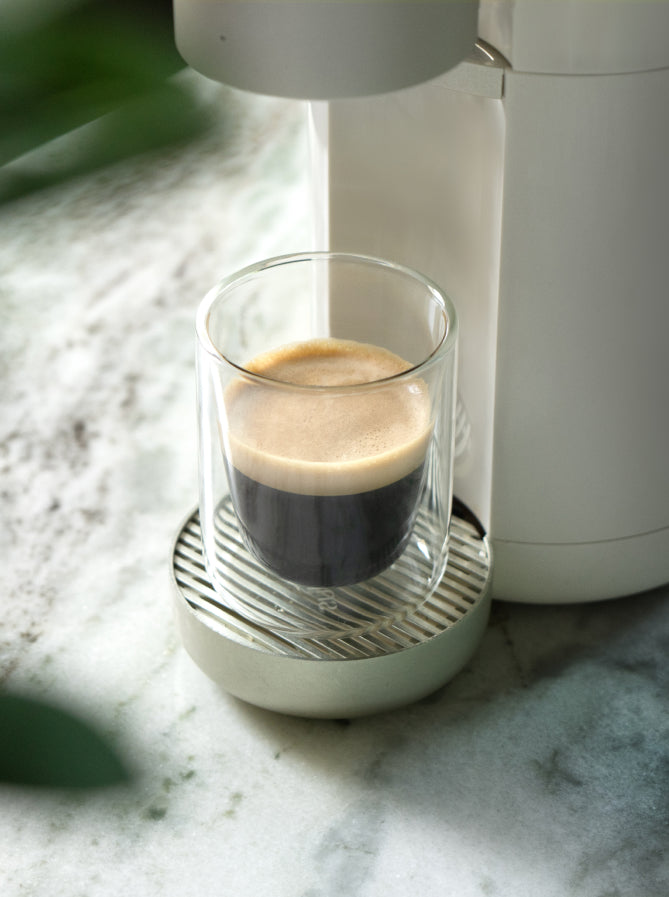
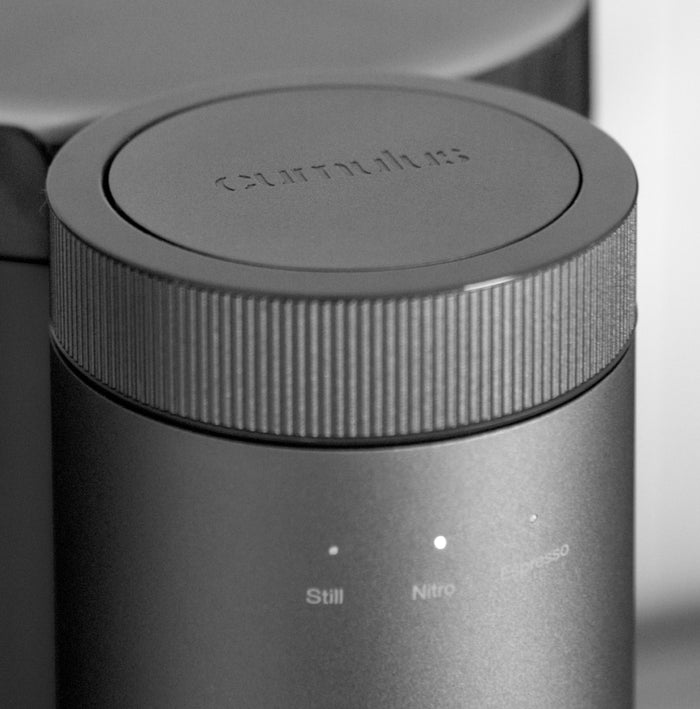
It is also the gap Cumulus set out to close: do the 12 to 24 hours in advance, and a capsule plus a cold coffee machine gives you the same cup every time, in under 60 seconds. Cohen helped select the beans and formulate the roast profiles behind it [5], so when he talks about what is in the capsule, he is describing his own work.
PUTTING IT ALL TOGETHER
Next time you are at a counter, ask whether their cold brew is actually cold brewed. Not to catch anyone out. Ask because there are two genuinely different drinks behind that word, and a good shop will be glad you wanted to know which one you were getting.
Then run it yourself: same beans, one cold brewed, one brewed hot and iced, side by side. Seven minutes of video and one afternoon of tasting, and you will never order blind again.
FREQUENTLY ASKED QUESTIONS
What is the difference between cold brew and iced coffee?
Iced coffee is hot brewed coffee chilled and served over ice. Cold brew is brewed with cold water from the start, steeping coarse grounds for 12 to 24 hours. They differ in extraction and in taste.
Is cold brew stronger than iced coffee?
Not automatically. Strength depends on the coffee-to-water ratio and dilution. Per Cohen, cold brew's smoothness comes from selective cold extraction, not from being weak or strong [1].
Is cold brew less acidic than hot coffee?
Partly. Rao and Fuller found hot brews had higher total titratable acids, but pH was comparable at 4.85 to 5.13 [2]. Cold brew is not a guaranteed fix for acid-related stomach issues [3].
Why is my homemade cold brew inconsistent?
Manual steeping depends on grind, time, temperature, and ratio staying identical batch to batch, which is hard to control by hand. Cohen names this from his own experience [1].
Who is Major Cohen?
Major Cohen is a master coffee educator, a licensed Specialty Coffee Association trainer, and the author of Coffee For Dummies. He hosts the Cold Brew Lab and is a coffee expert and adviser at Cumulus Coffee.
References
1. Cohen, Major. “The Cold Brew Lab: Brewing.” YouTube, uploaded by Cumulus Coffee, www.youtube.com/watch?v=44y5dgpTLY0.
2. Rao, Niny Z., and Megan Fuller. “Acidity and Antioxidant Activity of Cold Brew Coffee.” Scientific Reports, vol. 8, no. 1, 30 Oct. 2018, article no. 16030. PMID 30375458. https://doi.org/10.1038/s41598-018-34392-w.
3. “Hot Brew Coffee Has Higher Levels of Antioxidants than Cold Brew.” ScienceDaily, Thomas Jefferson University, 1 Nov. 2018, www.sciencedaily.com/releases/2018/11/181101085137.htm.
4. Rao, Niny Z., et al. “Physiochemical Characteristics of Hot and Cold Brew Coffee Chemistry: The Effects of Roast Level and Brewing Temperature on Compound Extraction.” Foods, vol. 9, no. 7, 9 July 2020, p. 902. PMID 32659894. https://doi.org/10.3390/foods9070902.
5. Hawkins, Nick. “The Future of Coffee: 3 Founders Who Left Starbucks to Reinvent the Coffee Business.” Inc., 29 Nov. 2024, www.inc.com/nick-hawkins/the-future-of-coffee-3-founders-who-left-starbucks-to-reinvent-the-coffee-business/91018659.

Read More